
Gay solo travel is at its best when you don't stay solo the whole time. Since 1996, most of the people I've met on the road came from sharing something: a room, a home, a campfire, a few days on the same trip. Dating apps are there, but they rarely find you a friend for the day.
Travel gets sold as a string of perfect moments: a beach at sunset, the view from the top of a mountain, a photo that makes everyone back home wish they were there. I love those moments too. I've been travelling for years, and I still get excited every time I arrive somewhere new.
But there's another side to it, especially when you travel alone for long stretches. You can have an amazing day and still end up eating dinner on your own. You can meet dozens of people and still miss a few familiar faces. And if you're LGBTQ+, finding people you really click with can be harder than finding the nearest gay bar.
I've been thinking about this for a long time. In fact, I think it all started on a ski slope in the 1990s.
Before apps, we had a noticeboard
In 1996, I was 26 and living in London, and I wanted to organise a gay ski week. Not a weekend in a chalet, but a whole Club Med hotel, taken over by us for a week. I called it European Gay Ski Week. The idea was simple: bring gay people together in the mountains, give them a proper holiday, and make sure nobody had to wonder whether they were welcome.
Getting Club Med to say yes was another matter. The man who could make the decision didn't want to meet me. I kept calling his secretary for about a year. In the end she agreed to set up a meeting, on one condition: she never wanted to hear from me again!
I was given fifteen minutes. I stayed for an hour and a half.
He was worried about how it would look in public. I explained that these were people who wanted to ski, enjoy the mountains, have fun and spend a week together. He agreed, and passed me on to the London team to make it happen.
I ran the event for eight years, in different French ski resorts. Couples and friends had their own rooms. If you came on your own, you could pay 75% extra for a room to yourself, or share with one or two other guests. What I remember most is how easily people found each other. Long before booking sites and social media, I put up a noticeboard where guests could say they were looking for someone to share a room with. Others would get in touch, and that was it.
It worked brilliantly. The shared rooms were always popular, and the weeks always filled up. People weren't only saving money. They arrived with a ski partner or a dinner companion already waiting for them.
That noticeboard did something that still matters to me. It helped people connect before they'd even arrived.
Shocked cleaners and a cruise that never sailed
Not everything went to plan. One year we ran a summer version of the week in the south of Italy. We shocked the cleaners. A week later, they cried when we left.
I also tried to put together a gay cruise on the Nile. The tour operator I wanted to work with wouldn't allow it, and the project never went ahead. Looking back, both stories say the same thing to me: people can surprise you in both directions, and you don't always know which way it'll go until you're there.
The part of solo travel nobody puts in the photos
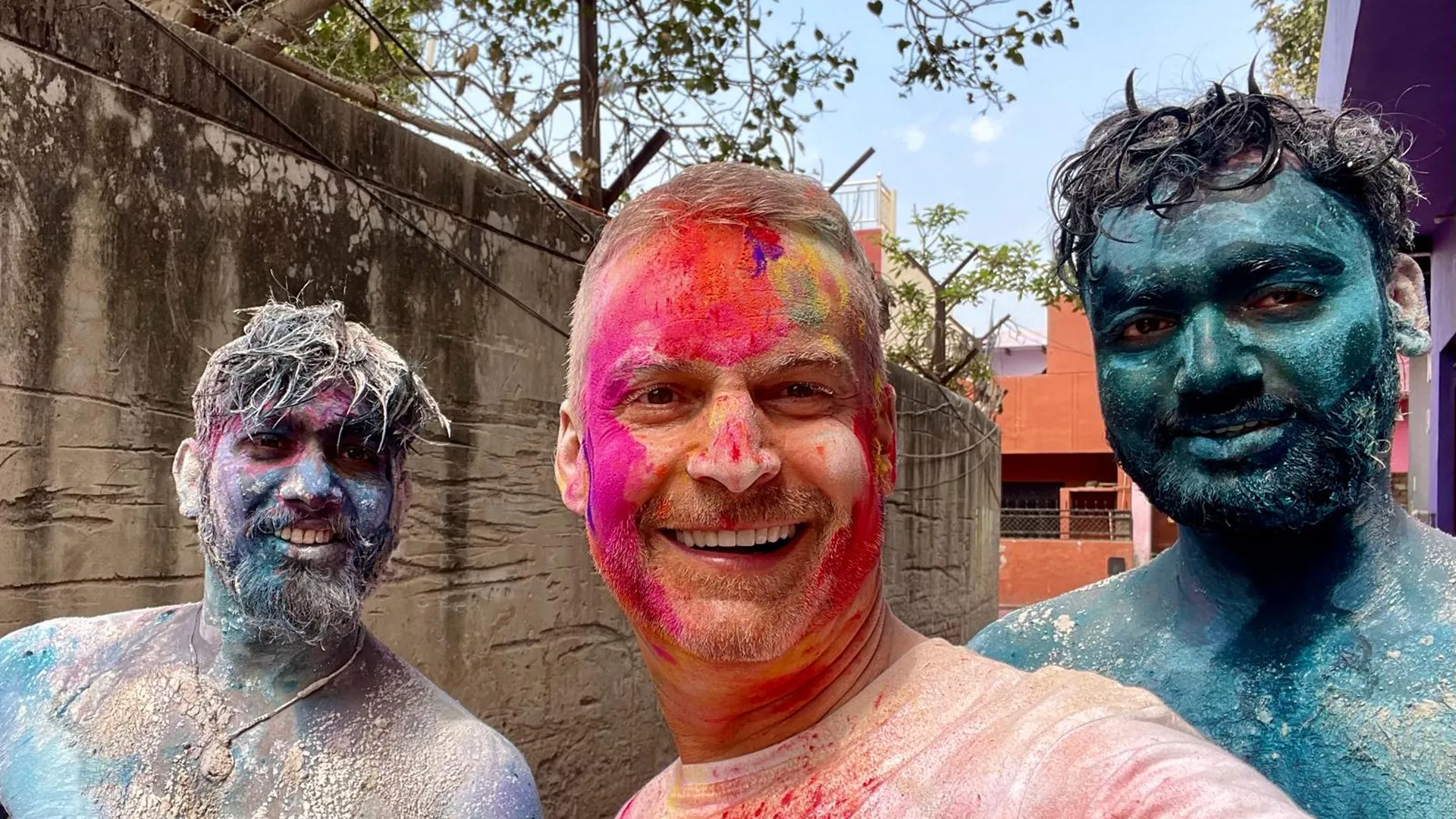
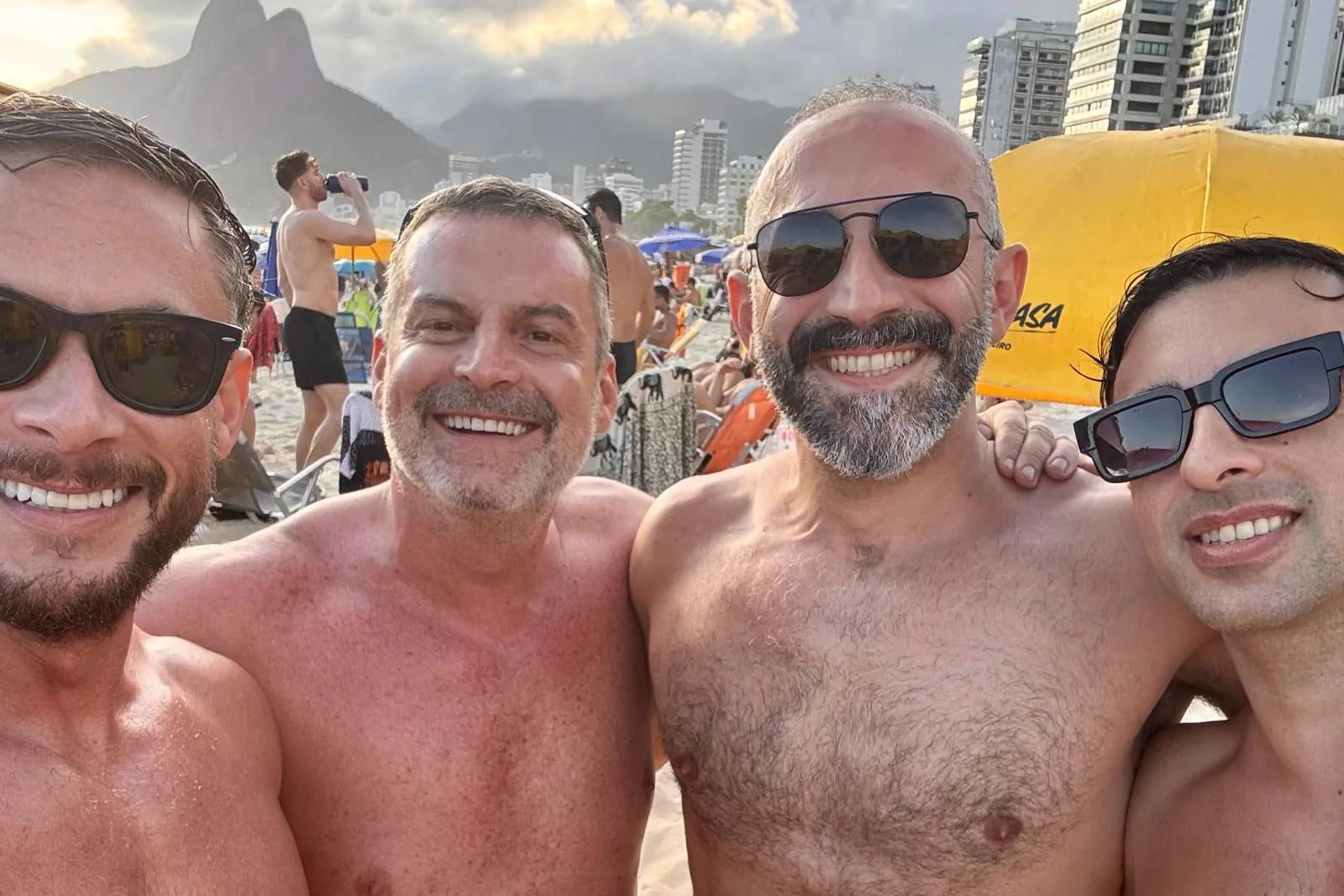
I've been travelling full time for several years now. I've had some extraordinary experiences, from Holi in India to Carnival in Rio, and I've met people in all sorts of places. I share most of it on Instagram as @gaytravelnomad, which is where the photos in this post come from.
But I'd be lying if I said it was always easy.
When you travel alone, there are days when you want to share what you've seen with someone who understands you. Sometimes you just want company for a meal or a day trip, or a conversation that goes further than "Where are you from?" and "Where are you going next?"
For gay men, there are plenty of ways to meet people, but most of the well-known apps are built around dating or sex. There's nothing wrong with that if it's what you want. It just doesn't cover everything. Sometimes I want to meet another gay person because we'd both enjoy the same museum or hike, or some ridiculous local adventure. I'm not always looking for a date.
Being yourself, while knowing where you are
The trip that taught me most about this was a three-week overland safari across five African countries.
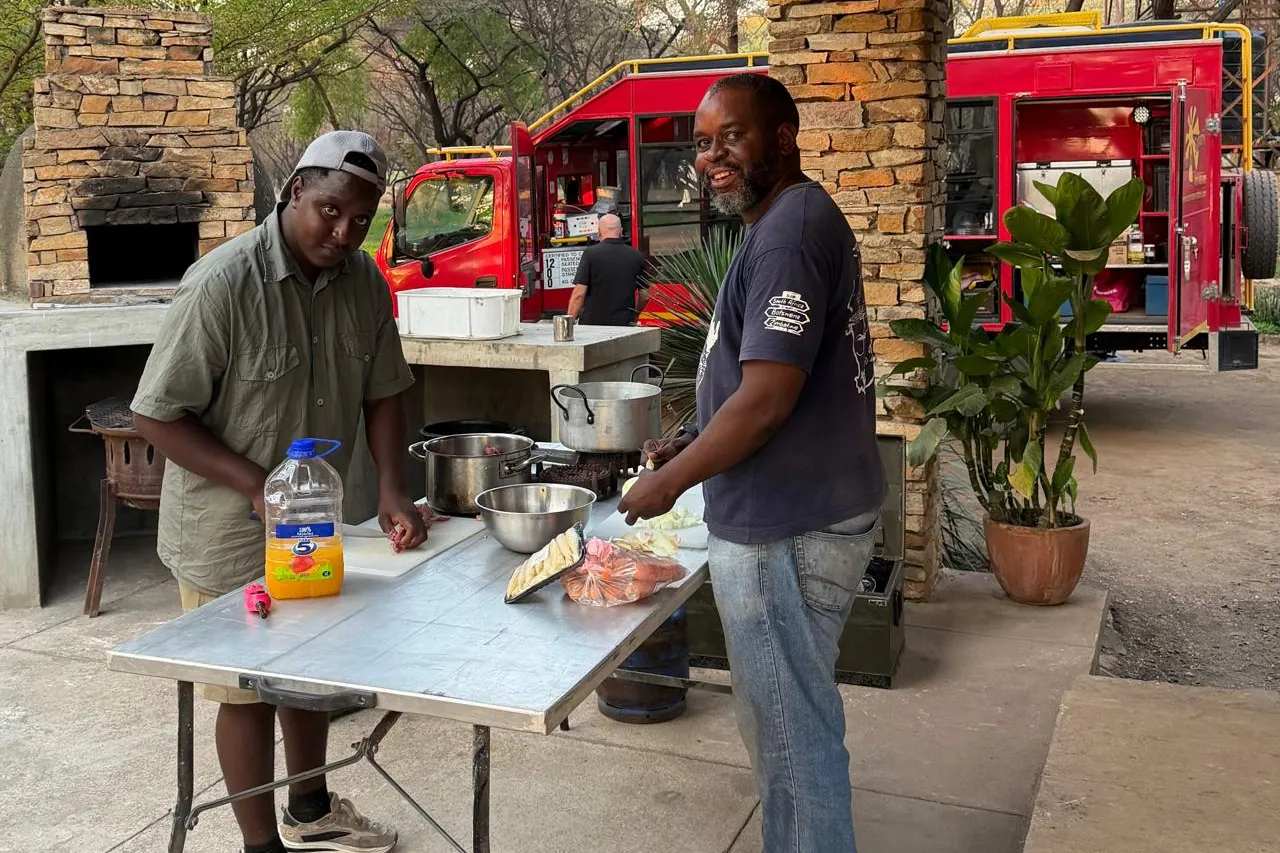
We drove through villages, stopped at local markets and spent our evenings around the campfire. Two local guides travelled with us, one from Mozambique and one from Zambia. They weren't gay, but after days on the road together we got to know each other well.
I was open about being gay. I didn't announce it at every market stall, because it doesn't usually come up when you're buying fruit or asking for directions. But around the campfire we talked about relationships, marriage and why I didn't have children. I joked about being gay, and it was just part of who I was.
I never once felt threatened or uncomfortable. But I was very aware that my situation was nothing like that of a gay person living in some of those countries. In parts of the region, the law and local attitudes can make being openly gay dangerous. I could climb back into the truck and move on. A local person lives with it every day.
I've had the other kind of experience too. In 2005, my boyfriend and I were in Caracas, Venezuela, and asked at our hotel's reception for a double bed. The answer came back in a hard voice: "¡Aquí, eso no se hace!" Here, we don't do that. There was no discussion. We could have picked up our bags and gone somewhere else. But I've never forgotten how quickly a welcome can disappear.
So I'm not telling the safari story to say you'll be safe anywhere, because you won't always be. Check the law and the local mood before you go. The UK Foreign Office has a page of advice for LGBT+ travellers, and your own government will have travel advice too. Then, once you're there, read the room.
My own rules are simple. I never assume I have the same rights abroad as I do at home. And I've never hidden who I am in somebody's home, and I'm not going to start now. If staying somewhere meant worrying all week about whether my host would find out I'm gay, I'd rather go somewhere else. There's nearly always another room, even if it takes a bit longer to find.
For me, that trip was a reminder that travel is about people as much as places, and that you can be open about who you are while knowing that others don't have the same freedom.
The local connection I'd love to find more easily
Rio is another place that makes me think about the value of knowing someone local. Carnival is something I think everyone should experience at least once, and meeting people around Ipanema is how you find out where the city really comes alive.
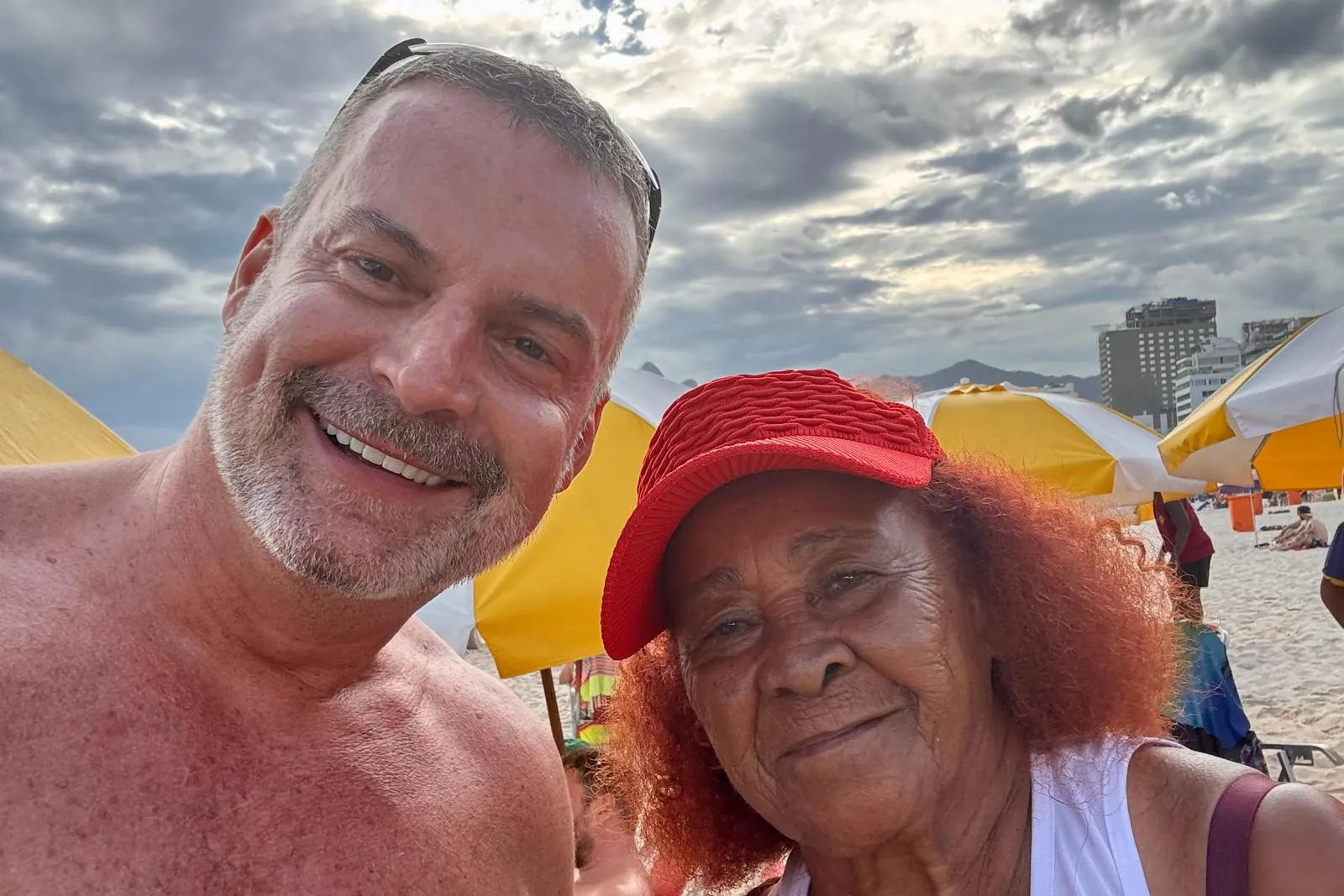
I've looked at staying with a local host in Rio, because it seems like the best way to get off the tourist trail: to find out where people actually go, which events are worth knowing about, and what the city's like when you live there. I haven't done it yet, partly because the prices on some of the specialist sites didn't make sense to me. But the idea has stayed with me.
I have stayed in a room in someone's home before, though. A few years ago in London, I rented a room in a man's flat in Stockwell, mainly because it was central and the price was fair. The host was discreet and I hardly saw him. The surprise was the guest in the third bedroom. We got on straight away and ended up going bar-hopping together. I'd booked a bed for a few nights and came away with someone to go out with.
Independence doesn't have to mean being alone
I still love travelling on my own terms. I like changing plans, getting lost in a market and finding places that were never on my list. I don't want every trip to turn into a group tour.
But being independent doesn't mean you have to be isolated. Sometimes the best thing about arriving somewhere new is already knowing one person there. Sometimes it's a host with a spare room who tells you about a local festival or a little restaurant you'd never have found on your own. And sometimes it's another traveller who happens to be heading the same way.
Sometimes it goes even further. On an overland trip from Kenya to Victoria Falls, I met a woman I got on with so well that I offered her the spare room in my home. She moved in and quickly became a close friend. Years later, we still write to each other.
What's helped me find my people on the road
None of this is a formula, but these are the habits that have worked for me, again and again:
- Share a room, or a home. The ski week noticeboard and the room in Stockwell taught me the same thing. A shared roof gets you talking far faster than a hotel corridor. Choose the place with care, though: read the listing and the reviews, message the host before you book, and only go ahead if you're comfortable with the arrangement.
- Join something that lasts a few days. An overland trip, a group week or a retreat puts you with the same people at breakfast and around the fire, and that's when real conversations start.
- When it feels right, say yes to the next invitation. A drink after the museum, dinner after the hike. Most of my friendships from the road began with one of us suggesting the next thing. And if it doesn't feel right, a polite no is fine too.
- Look beyond dating apps. They're fine for what they're for. For a friend for the day, try a group trip, or somewhere built for meeting people as friends.
- Check the law before you go. The UK Foreign Office's advice for LGBT+ travellers and your own government's travel advice for the country are good places to start. How open you are once you're there is your choice, and it can change from place to place.
The same habits work when you've settled somewhere, too. If you've just moved somewhere new, our guide to making LGBTQ+ friends near you picks up from here.
Where this fits with Among Our People
That's why I started Among Our People. In a way, it's my old noticeboard all over again, only online.
You can stay with a local LGBTQ+ host, or add the trips you're planning and look for a travel buddy heading the same way. Once you've arrived, you can find local friends, or book a retreat, tour or cruise with people you'll have something in common with.
If you've got a spare room, you can host travellers too. We never take a commission, so you keep what your guests pay.
Every new listing is checked before it goes public, and you can report or block anyone. Nobody's asked to prove they're LGBTQ+. There's more in member safety on Among Our People.
We've only just launched, so it's still small. Right now everything on Among Our People is free while we launch: complete your profile to 100% and it's all open to you. If you've got a trip coming up, add it and see who else is heading your way. ✦
Photos: Eric Crespin, @gaytravelnomad on Instagram. Eric Crespin is the founder of Among Our People.
Last reviewed: 4 November 2026